


 720-777-0123

-
Conditions & Advice

Parenting Tips and Advice
From bringing home a new baby to building trust with your teen, our pediatric experts share guidance to help you navigate the ups and downs of parenthood.
-
Your Visit
Click to find the locations nearest you
Find locations by region
See all locations -
Research & Innovation

It starts with a Q:
For the latest cutting-edge research, innovative collaborations and remarkable discoveries in child health, read stories from across all our areas of study in Q: Advances and Answers in Pediatric Health.


ParentSmart HealthlineTM
Caring pediatric nurses are available 24/7 to help answer your questions.
Send Postal Mail To:
Children’s Hospital Colorado
Anschutz Medical Campus
13123 East 16th Avenue
Aurora, CO 80045
Emergency and urgent care locations
In life-threatening emergencies, find the emergency room location nearest you. For non-life-threatening medical needs when your pediatrician is unavailable, visit one of our urgent care locations.
Urgent care locations (hours vary)
See all urgent care locationsNot sure if you need urgent or emergency care? Help me decide
All locations
See a listing of all our Children’s Hospital Colorado locations including inpatient, outpatient, therapy, surgery facilities and more.
Locations near you
See all locationsMore Options


Skeletal Dysplasia Program
Achondroplasia
We see more, treat more and heal more kids than any other hospital in the region.


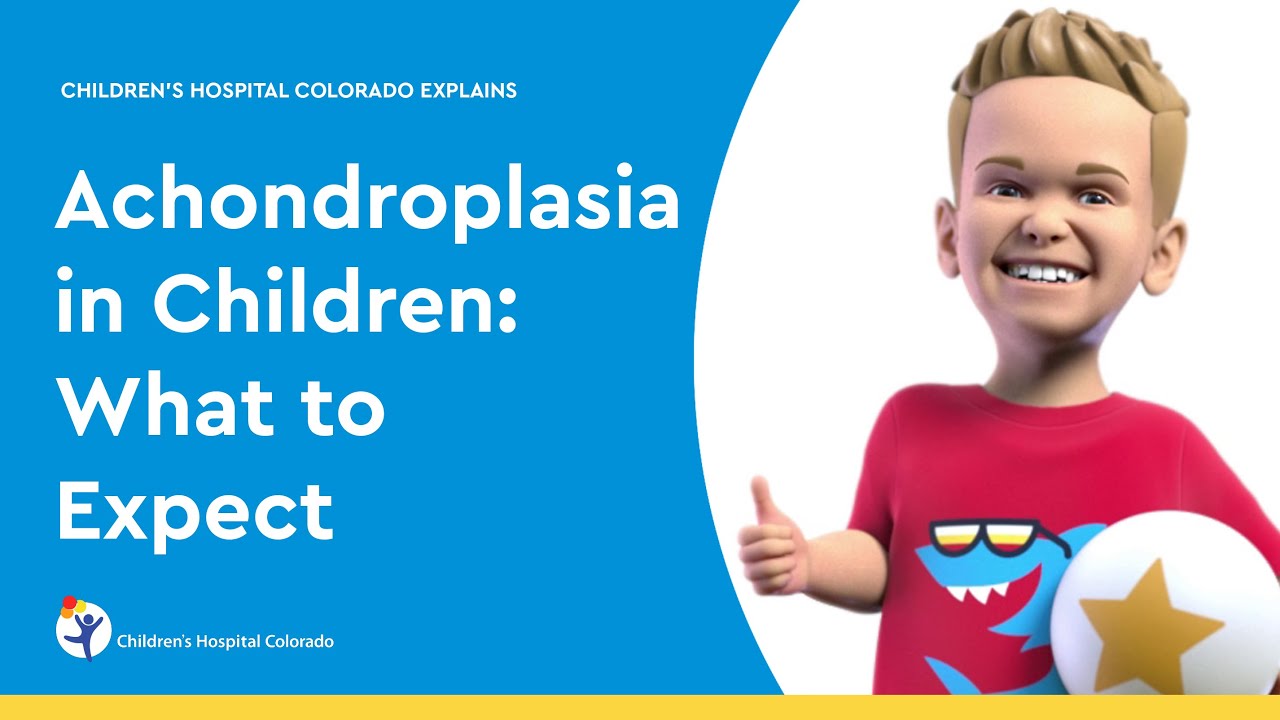
What is achondroplasia?
Achondroplasia is a genetic condition that affects how bones grow, especially in the arms and legs. Children with achondroplasia have slower bone growth, which leads to short stature and differences in the shape of the spine and limbs.
Achondroplasia is the most common form of skeletal dysplasia. People with achondroplasia have physical differences, but most live healthy, fulfilling lives. They typically have the same life expectancy and intellectual ability as the general population.
What causes achondroplasia?
A genetic change (mutation) in the FGFR3 gene causes achondroplasia. The FGFR3 gene is important for turning cartilage into bone.
All bones start out as cartilage and slowly turn into bone over time, beginning before birth and ending in young adulthood. The change in the FGFR3 gene of people with achondroplasia sends a message to the body to slow this process, called ossification. As a result, bones grow more slowly than usual.
Who gets achondroplasia?
About 80% of babies with achondroplasia have no family history of the condition. The condition results from a new gene change that happens in either the egg or sperm before conception. The chance that this change will occur in another child in the same family is very small (2% to 3%).
Other children inherit the FGFR3 gene change from a parent who has achondroplasia. For each of their children, a parent with achondroplasia has a 50% chance of passing the gene change on to the child. This process is called autosomal dominant inheritance.
What are the signs and symptoms of achondroplasia?
Children with achondroplasia may show different symptoms at different ages.
Before birth, a prenatal ultrasound — especially in the third trimester— may show some signs of achondroplasia. These signs may include:
- A larger head (macrocephaly) with a prominent forehead (frontal bossing)
- Short arm and leg bones
- Short fingers and toes, with extra space between the middle and ring fingers (trident hands)
- Too much amniotic fluid (fluid that surrounds and protects your baby in the uterus)
At birth, newborns may show more signs, such as:
- Bowed legs (knees bend outwards, also called genu varum)
- Flattened nose bridge
- Fluid buildup in the brain (hydrocephalus)
- Loose knee joints or stiff elbow joints
- Low muscle tone (floppy infant) that may delay motor skills
- Narrowed spine bones (stenosis)
- Short arms and legs, especially in the upper arms and thighs
- Spinal cord compression at the base of the skull where it passes from the brain into the spine
As children with achondroplasia grow, they may develop:
- Bowed legs
- Curved spine, which may be lordosis (inward curve of the lower spine), kyphosis (outward curve of the upper spine) or both
- Delayed development, like learning to walk later than usual
- Frequent ear infections
- Short stature
- Slow or stopped breathing (apnea) for short periods
How do we diagnose achondroplasia?
Our experts will likely diagnose achondroplasia after your baby is born, based on:
- Genetic testing
- Medical history
- Physical exam
- X-rays of the long bones
However, if our specialists see signs of achondroplasia on a fetal ultrasound, you may decide to have a test called amniocentesis to confirm the diagnosis. This test can detect genetic conditions in an unborn baby. Your doctor will insert a needle through your belly into your uterus to take a small sample of amniotic fluid for analysis.
You may then have more ultrasounds to monitor the size of your baby’s head and overall growth. Our specialists may advise you to deliver by C-section and sometimes early.
How do we treat achondroplasia?
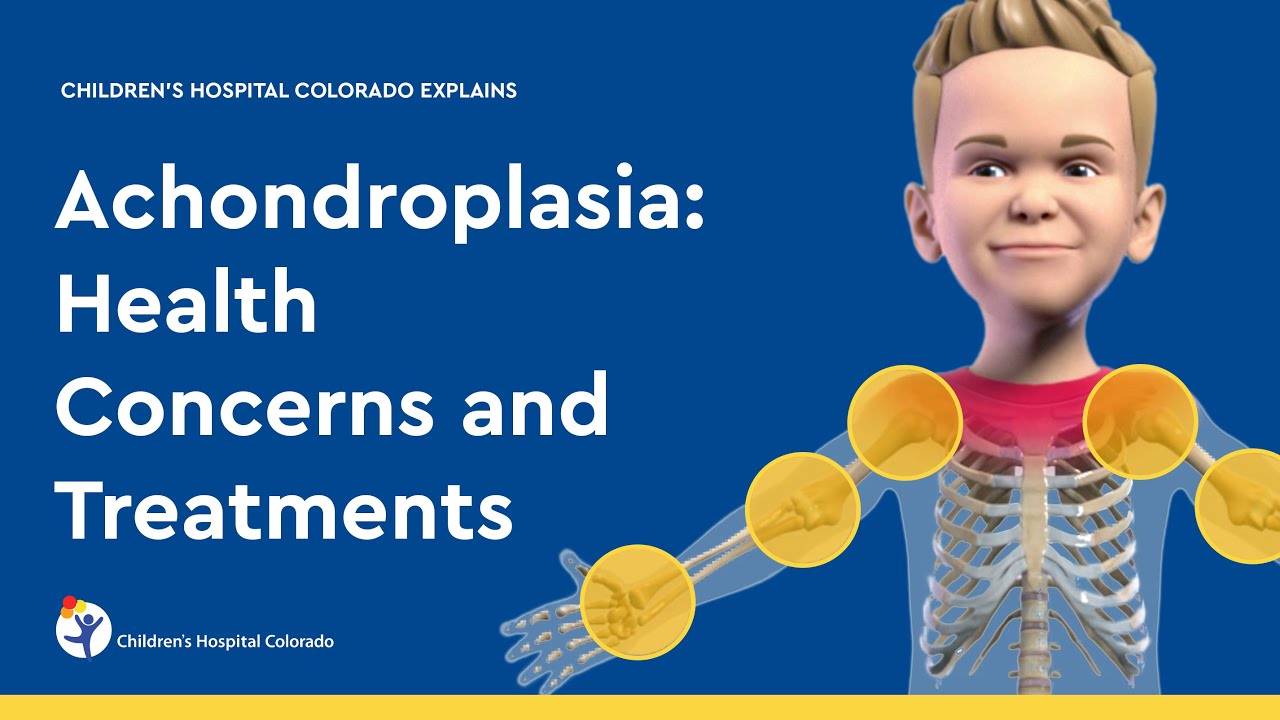
Treatment of achondroplasia focuses on monitoring and managing symptoms and complications of achondroplasia as children grow.
There is no treatment for babies with achondroplasia before birth. And most newborns who have achondroplasia do not need special medical treatment.
We may recommend X-rays or genetic testing soon after birth to confirm your baby’s diagnosis. We may also recommend:
- Head and body measurements to assess growth and check for fluid buildup in the brain
- Magnetic resonance imaging (MRI) to check for spinal cord compression
Ear, nose and throat monitoring
We perform regular ear, nose and throat checkups, such as:
- Checking for enlarged tonsils or adenoids, which can block a child’s airway
- Hearing tests
- Sleep studies to check for sleep apnea, which increases the risk of sudden infant death syndrome (SIDS)
Treatment for ear, nose and throat conditions may include:
- Ear tubes to treat chronic ear infections
- Positive airway pressure devices (CPAP or BiPAP) to improve breathing while sleeping
- Surgery to remove tonsils or adenoids
Growth and development monitoring
We use special growth charts to monitor children with achondroplasia. Treatments to help your child’s overall growth and development may include:
- Dental and orthodontic care to fix crowded teeth
- Physical therapy, occupational therapy or speech-language therapy
- Support for school success, like IEP or 504 plan recommendations
Spine and bone monitoring
We perform regular neurological exams and imaging studies, like X-rays and MRIs, to watch for spine and bone changes. Possible treatments include:
- Back brace or surgery to treat kyphosis
- Surgery to relieve pressure on the spine (spinal decompression)
- Surgery to treat leg bowing
Why choose us for achondroplasia treatment?
Families often look for answers and reassurance when they learn their baby may have achondroplasia. At Children’s Hospital Colorado, we provide both. We offer fully integrated care to meet your family’s needs. We develop relationships with your family from the very beginning, so you feel safe and supported throughout your child’s journey.
From your first appointment at our Colorado Fetal Care Center, your family will receive:
- Expert, comprehensive care from our team of fetal specialists: We’ve performed more than 2,200 deliveries since 2012 for pregnancies with fetal conditions.
- An outstanding patient experience: More than 94% of patients rated their experience as 9 or 10 out of 10.
- High-quality imaging to ensure you get the most accurate diagnosis: Our medical sonographers and maternal fetal medicine doctors perform more than 3,000 ultrasounds per year and specialize in diagnosing only fetal conditions.
As your baby grows, pediatric experts in our dedicated Achondroplasia Clinic within our Skeletal Dysplasia Program will provide your child all the care they need, including:
- Access to cutting-edge treatments: Our Skeletal Dysplasia Program offers access to approved growth therapies and clinical trials that may not be available at other centers.
- Advanced X-ray technology to minimize radiation exposure: Our cutting-edge X-ray machines deliver precise images with very low radiation exposure for your child (sometimes as little as the amount they would get from a few days of natural sunlight).
- Specialists with a thorough understanding of this rare condition: We’re a Rare Disease Center of Excellence with the highest level of expertise to treat achondroplasia.
- Tailored care to meet your child’s changing needs as they grow: We support your child at every stage, from connecting you with early intervention services and school accommodations to promptly addressing orthopedic or neurosurgical concerns.
FIRST
Comprehensive skeletal dysplasia program in the region
20+
Years of experience treating achondroplasia
14
Dedicated team members
What resources are available for achondroplasia?
Several organizations offer information, support and resources for people with achondroplasia, such as:
- Little People of America
- Magic Foundation
- National Institutes of Health, Genetic and Rare Diseases Information Center: Achondroplasia
- National Institutes of Health, U.S. National Library of Medicine: Achondroplasia
- National Organization for Rare Disorders (NORD): Caregiver Respite Program and Rare Disease Educational Support
Frequently asked questions about achondroplasia
Our skeletal dysplasia experts provided answers to these common questions.
What is the life expectancy for achondroplasia?
People with achondroplasia have about the same life expectancy as people without the condition.
Could I have another child with achondroplasia?
If you or your partner has the FGFR3 gene, each of you has a 50% chance of passing the gene to any future child. We offer prenatal genetic screening and testing that may detect achondroplasia in the first trimester, much earlier than an ultrasound can detect it. Our genetic counselors can help you decide whether genetic testing is right for you.
If neither parent has the condition, your risk of having another child with achondroplasia is very low (about 2% to 5%).
Is the achondroplasia gene dominant or recessive?
The FGFR3 gene mutation that causes achondroplasia is dominant, not recessive. Each person has two copies of the FGFR3 gene. A child needs only one copy of the gene change to develop achondroplasia.
How common is achondroplasia?
Achondroplasia occurs in 1 out of every 26,000 to 40,000 children.
Did I do anything to cause achondroplasia in my baby?
Nothing either parent does before, during or after pregnancy can cause achondroplasia. Your child can inherit the condition if either parent has the FGFR3 gene change. However, a random gene change at conception causes achondroplasia most of the time.
It is common for parents to feel responsible for their child’s condition. But you cannot prevent gene changes that lead to conditions like achondroplasia, even when they are inherited from a parent.

Patient stories
Wyatt
Due to his size, a string of respiratory illnesses caused Wyatt’s heart and lungs to go into overdrive. Our experts helped him fight for his life.
Next steps
-
Would you like to learn more about us?
Learn more about the Skeletal Dysplasia Program -
Do you have questions about this condition?
720-777-6875 -
Want a second opinion?
Get started