


 720-777-0123

-
Conditions & Advice

Parenting Tips and Advice
From bringing home a new baby to building trust with your teen, our pediatric experts share guidance to help you navigate the ups and downs of parenthood.
-
Your Visit
Click to find the locations nearest you
Find locations by region
See all locations -
Research & Innovation

It starts with a Q:
For the latest cutting-edge research, innovative collaborations and remarkable discoveries in child health, read stories from across all our areas of study in Q: Advances and Answers in Pediatric Health.


ParentSmart HealthlineTM
Caring pediatric nurses are available 24/7 to help answer your questions.
Send Postal Mail To:
Children’s Hospital Colorado
Anschutz Medical Campus
13123 East 16th Avenue
Aurora, CO 80045
Emergency and urgent care locations
In life-threatening emergencies, find the emergency room location nearest you. For non-life-threatening medical needs when your pediatrician is unavailable, visit one of our urgent care locations.
Urgent care locations (hours vary)
See all urgent care locationsNot sure if you need urgent or emergency care? Help me decide
All locations
See a listing of all our Children’s Hospital Colorado locations including inpatient, outpatient, therapy, surgery facilities and more.
Locations near you
See all locationsMore Options


Single Ventricle Program
Hypoplastic Left Heart Syndrome (HLHS)
We see more, treat more and heal more kids than any other hospital in the region.


What is hypoplastic left heart syndrome?
Hypoplastic left heart syndrome (HLHS) is a congenital heart defect, meaning kids are born with the disease. Children with HLHS have a small, underdeveloped left side of the heart. This may involve all or some parts of the left heart, including the aorta, aortic valve, left ventricle and mitral valve. The left side of the heart is so underdeveloped that it cannot pump enough blood to the body.
For children with HLHS, the only way for blood to get to the body is if it can pass back through the heart from the left atrium to the right atrium and ventricle. Then, the blood passes through the pulmonary artery and through a small hole called the ductus arteriosus that connects to the aorta. The ductus arteriosus is one of the heart structures that allows a baby's heart to function in the womb, but it starts to close very soon after birth. This prevents blood from flowing properly, which is why early diagnosis and treatment are critical.

How rare is HLHS?
HLHS occurs in about 1 in 3,800 babies. Hypoplastic left heart syndrome is more common in boys than girls, although the reason is not known. About 8% of kids with congenital heart defects have hypoplastic left heart syndrome.
Why choose us for HLHS care?
At Children's Colorado, experts in the Colorado Fetal Care Center and Heart Institute have decades of experience caring for children with HLHS. If your baby is diagnosed before birth, experts in our Fetal Cardiology Program will design a care plan that is right for both you and your baby. We'll be with you every step of the way, from diagnosis and delivery to follow-up visits.
After your baby's birth, experts in our Single Ventricle Care Program will provide lifelong care for your child to help them thrive. Even though the condition is rare and the surgeries take extremely skilled and experienced surgeons, we have performed hundreds since the program’s inception. What is rare for other centers is common for our heart experts and it shows in our outstanding heart surgery outcomes.
We’re here for you far beyond surgery. If you need follow-up care with our heart team or experts in other specialties, you’ll find that at Children’s Colorado — all in one place.
What are hypoplastic left heart syndrome symptoms?
While there are no outward symptoms of HLHS before birth, doctors may spot signs via routine tests. Other symptoms are noticeable after birth.
HLHS symptoms before birth
The main symptom a doctor would spot before birth is a structural issue with the baby’s heart chambers or valves found by ultrasound.
HLHS symptoms after birth
- Blue or gray tinted skin, known as cyanosis
- Low or faint pulse
- Trouble nursing and feeding
- Fast breath or shortness of breath
- Extreme tiredness
- Loud heartbeat (murmur)
How do we diagnose hypoplastic left heart syndrome?
In some cases, doctors can diagnose a child's HLHS during a routine ultrasound exam before they are born. If your doctor suspects hypoplastic left heart syndrome, they will request more tests to confirm the diagnosis. The most common test is a fetal echocardiogram, which lets pediatric cardiologists see the structure of the heart and how it is functioning before your baby is born. If they do confirm an HLHS diagnosis, you will likely be referred to our Maternal Fetal Medicine Program for additional monitoring and to meet with our fetal cardiologists throughout your pregnancy.
After birth, specialists use several tests or exams to diagnose HLHS and prepare for surgery. These cardiac tests include:
- Echocardiogram
- Chest X-ray
- EKG
- CT scan
- Cardiac catheterization
- Intracranial and renal ultrasounds
What are hypoplastic left heart syndrome treatment options?
At Children's Hospital Colorado's Heart Institute, our doctors are experts at identifying and treating HLHS. To treat hypoplastic left heart syndrome, our doctors take a multifaceted approach.
HLHS medication
After your child is born, their cardiologist will start them on medicine that helps keep the passage (ductus arteriosus) between the aorta and pulmonary artery open. This medicine is called prostaglandin E2 (PGE-2) and by keeping the ductus arteriosus open, it allows oxygen-rich blood and blood that needs oxygen to mix inside the heart. Doctors give this medication continuously through an IV before the baby’s first surgery.
There are two options for surgery for children with hypoplastic left heart syndrome: a surgical repair or a heart transplant. In some cases, a child may need both.
Heart surgery
HLHS repair takes a series of surgeries, usually three, that typically take place within the first four years of the child’s life.
Norwood procedure
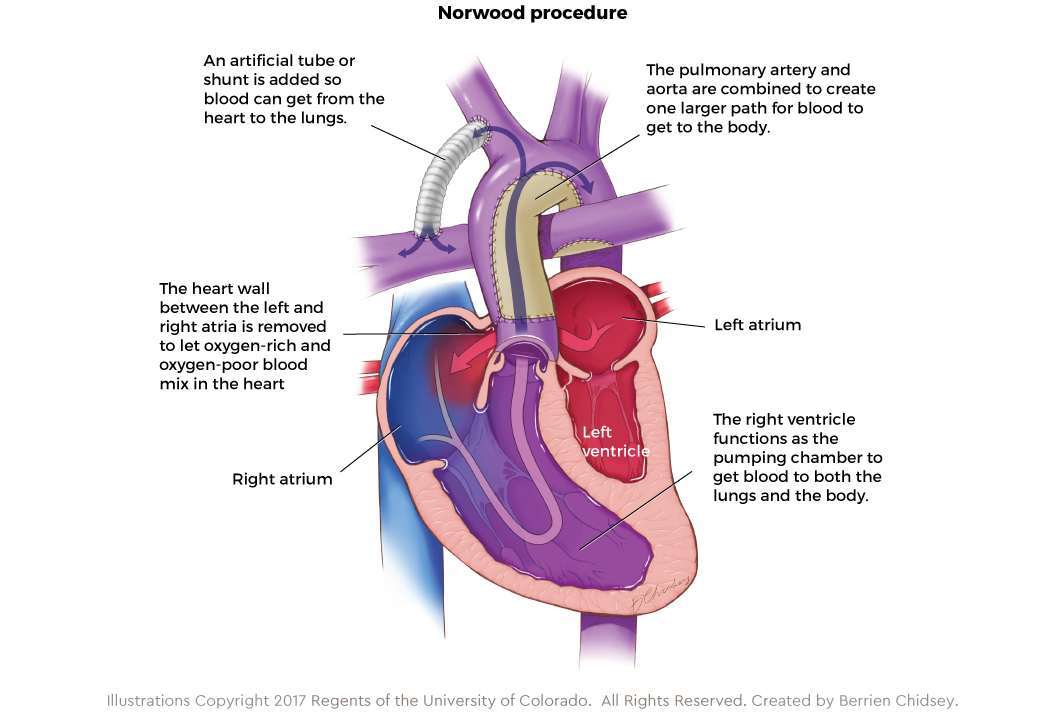
The first surgery, called the Norwood procedure, happens in the first week of life. This surgery allows the right ventricle to function as the pumping chamber to get blood to both the lungs and the body.
During the Norwood procedure, surgeons combine the pulmonary artery and aorta to create one larger path for blood to get from the heart to the body. Doctors remove the heart wall between the left and right atria to let oxygen-rich and oxygen-poor blood mix in the heart. Surgeons place an artificial tube, or shunt, between the heart and the lungs to allow blood to get to the lungs.
After the Norwood procedure, your child will require close monitoring and follow-up appointments with our Interstage Clinic to ensure their heart is functioning without issues and to monitor their feeding and growth prior to their second surgery.
Glenn procedure
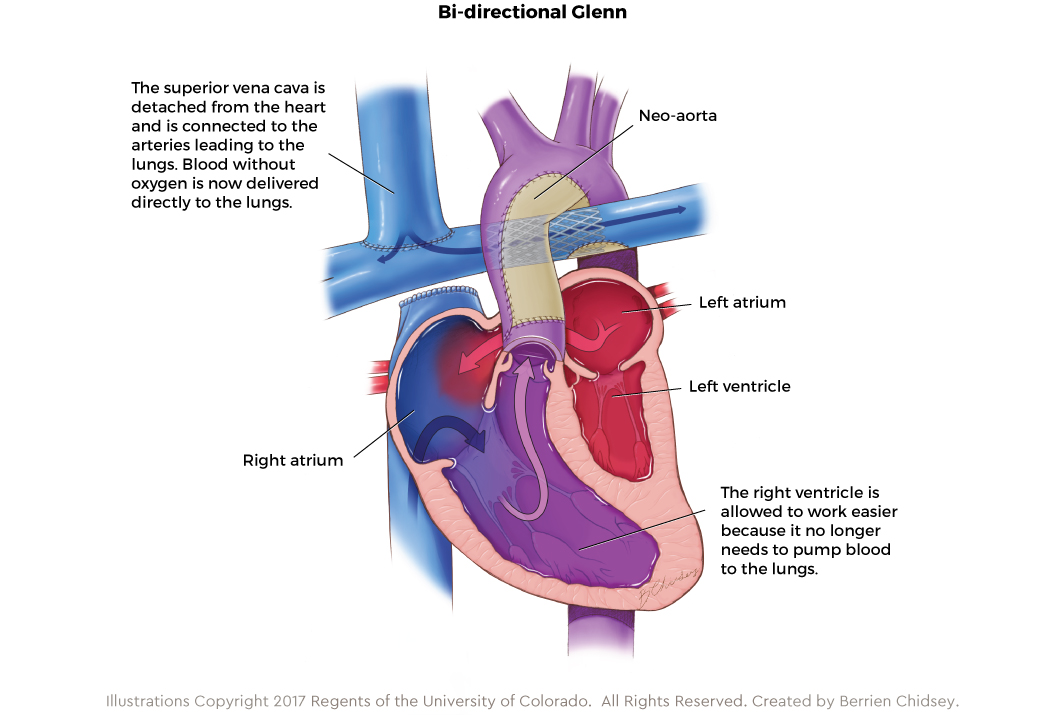
The second surgery, the Glenn procedure (sometimes called a bi-directional Glenn or the Hemi-Fontan), is usually performed between 4 and 6 months of age. This surgery redirects blood from the upper part of the body, away from the heart and directly to the lungs.
Fontan procedure
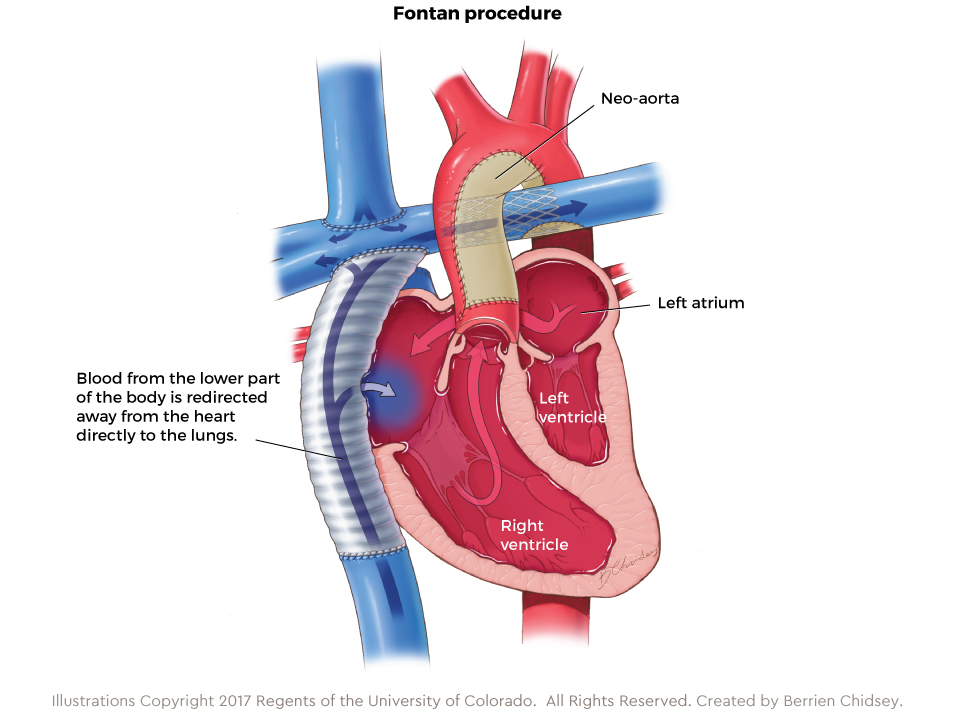
The third surgery redirects the blood from the lower part of the body away from the heart directly to the lungs. This is called the Fontan procedure and surgeons usually perform it between 2 and 4 years old.
This series of surgeries allows most children to have full, healthy lives. But like any child with congenital heart disease, they will need to see a cardiologist for follow-up appointments and monitoring. We care for many kids via checkups throughout their lives and then in adulthood in our Adult Congenital Heart Disease Program.
Heart transplantation
At any stage of repair for HLHS, complications can happen that could require a heart transplant. At Children's Colorado, we have been transplanting hearts to save lives for decades.
Rather than doing surgery to repair the existing heart, a heart transplant replaces a child’s heart with a new one from a donor. A child with a transplanted heart requires lifelong medication and monitoring.
Learn more about our nationally recognized Heart Transplant Program.
Living with hypoplastic left heart syndrome
After surgery, we have all the support and care your child will need. Our pediatric cardiologists will monitor their health in routine follow-up appointments to make sure they’re thriving. Most children will need to take medication after surgery. Your family will have support from physical and occupational therapists, mental health and neurodevelopmental specialists, social workers and many others in addition to your dedicated heart team. We’re all here to ensure your child can lead a happy, healthy life.
A guide to understanding an HLHS diagnosis
Receiving a HLHS diagnosis can be overwhelming. It also comes with a lot of questions. That’s why parents and guardians who have gone through this medical journey said they thought it was helpful to keep a running list of questions and answers they can refer to.
The resources below can help answer questions, provide further insight, be a source of comfort and help you know what to expect. Discover the many tools other families have found helpful.
Questions to ask when your child is diagnosed with HLHS
- Now that I know my child has a heart defect, what are the next steps?
- What are the treatment options for HLHS?
- Why is your center the best option for my child?
- How many Norwood, Glenn and Fontan surgeries do you perform each year?
- How often will I need an ultrasound or echocardiogram during my pregnancy?
- Can you explain the surgical procedures my child will need?
- How am I included in the decision-making for my child?
- What are your outcomes and survival rates for the Norwood, Glenn and Fontan procedures?
- Do you have resources to help families with a diagnosis like HLHS?
- Are there support groups for parents?
- Can you connect me with other HLHS families?
- What kind of support and resources do you have for siblings?
- What kind of monitoring and support do you offer between the Norwood and Glenn procedures?
Questions to ask your cardiac surgeon before your child's HLHS surgery
- How long is a typical hospital stay after each surgery?
- What is the difference between pediatric anesthesia, cardiac anesthesia and general anesthesia?
- Do oxygen saturation levels improve after each surgery?
- How long will my child need to be on oxygen after each procedure?
- What are potential complications I should look out for with each surgery?
Questions to ask after all HLHS surgical procedures
- How often do we need to schedule follow-up visits?
- How long do you support my child?
- What will life look like for my child a year or two from now?
- Is it safe for my child to run and play after they recover from each surgery?
- Will my child have psychological delays or other problems we should be aware of as they get older?
- What kind of feeding and nursing support do you offer?
- What can I do to help my child have a successful recovery?
Advice and wisdom from parents of children with HLHS
- Going into each of the surgeries, trust your instincts. Everyone's instincts are different, so listen to what yours are telling you.
- Remember that the rough patches don't last forever. As your child heals and gets older, they will play with more energy, eat better and be able to enjoy outdoor activities.
- Remember that other illnesses at a young age are harder on children with hypoplastic left heart syndrome than on kids without heart defects. Practice good hand hygiene to prevent the spread of illness.
- Say yes to any help when needed that your friends and family offer. Also, ask for specific help if you need something that hasn't been offered.
- This journey is hard, but these kids have incredible strength and fight. We call them Heart Warriors for a reason. They will show you true courage and strength, and in turn, they will help you find your own.
Outside resources
American Heart Association
The American Heart Association has important information about heart disease and how far we have come with medical advances for cardiac care.
Pediatric Congenital Heart Association
The Pediatric Congenital Heart Association provides helpful information, educational tools and facts about congenital heart disease. They also have an extensive research section about how they are working toward their mission of conquering congenital heart disease.
Single Ventricle Outcomes Network
The Single Ventricle Outcomes Network (SV-ONE) is a national collaborative learning health network dedicated to transforming outcomes for individuals living with single ventricle heart disease across the lifespan. There are numerous family resources available and active family participation is encouraged at conferences, panels and research initiatives.
Cardiac Neurodevelopmental Outcome Collaborative
The Cardiac Neurodevelopmental Outcome Collaborative was created to provide neurodevelopmental and psychosocial services for individuals with congenital heart defects and their families.
Ollie Hinkle Heart Foundation
The Ollie Hinkle Heart Foundation is a non-profit organization that connects patients and caregivers of children with congenital heart disease to mental health resources virtually and in the community.
Next steps
-
Would you like to learn more about us?
Learn about the Single Ventricle Program -
Are you ready to schedule an appointment?
Schedule an appointment -
Do you have questions about your child's condition?
720-777-5339

Patient stories
The odds that these two brothers were both born with HLHS were long. They needed an amazing care team to overcome those odds, and they got just that.
Get to know our pediatric experts.

Shelby Smiley, DNP, CPNP-AC, BSN
Certified Pediatric Nurse Practitioner
Patient ratings and reviews are not available Why?

Sherrill Caprarola, MD
Internal Medicine, Critical Care - Pediatric, Pediatrics
Patient ratings and reviews are not available Why?

John S. Kim, MD
Cardiology - Pediatric, Critical Care - Pediatric, Pediatrics
Patient ratings and reviews are not available Why?

Julia Dunn, CPNP, CPNP-AC
Certified Pediatric Nurse Practitioner
Patient ratings and reviews are not available Why?