



 720-777-0123






By 1985, surgeons had started coming to the operating room of Alberto Peña, MD, to observe a new pull-through surgical technique he developed for treating colorectal conditions. Eventually, he decided there were too many surgeons in his operating room — he needed to organize this somehow — so he created the Peña Course to teach the technique to aspiring colorectal surgeons.
Now, 40 years later, Dr. Peña and his team will be putting on their 70th Peña Course, which has evolved into a more comprehensive, multiday course known as the Workshop for the Surgical Treatment of Anorectal Malformations and Hirschsprung Disease in Children. The course now features multiple world-renowned surgeons and a host of other medical professionals. While the next course, starting on April 27, 2026, will be the 70th iteration in the U.S., the team has also taught the course in more than 20 different countries around the world and will soon be adding Argentina and Morrocco to that list.
The goal of the course is to inspire young surgeons and impart the decades of experience the team has gained through thousands of surgeries. The instructors do this over four days of classes, lectures, presentations, patient testimonies and the most unique aspect of the course — live surgical demonstrations. This powerful teaching approach is something that no other course offers, and is what convinced Dr. Peña to dedicate his life to pediatric surgery in the first place.
“The first time I was able to watch Dr. Robert Gross from Boston’s Children’s Hospital, I realized I was watching a master surgeon,” says Dr. Peña, thinking back to when he was a young surgeon. “What I saw during that procedure fascinated me — I was watching a master surgeon doing a procedure that was not just efficient, but beautiful and elegant, and I said, ‘That's what I want to do.’”
A team of experts to address every aspect of colorectal surgery
The Peña Course is taught by colorectal surgeons Dr. Peña, Andrea Bischoff, MD, and Luis de La Torre, MD. They are also joined by gynecological surgeon Veronica Alaniz, MD, MPH, and urologic surgeons Duncan Wilcox, MD, Kelly Harris, MD, and Daniel Wood, PhD, MBBS. Psychologist Laura Judd-Glossy, PhD, and Kristina Matkins also teach about the psycho-social aspects of treating these anomalies. There is also a portion of the course designed specifically for nurses and advanced practice providers, which is taught by our team of nurses and advanced practice providers.
Dr. Bischoff took the course herself in the year 2000. That year, there were about 90 pediatric surgeons taking the course and one medical student — Ms. Andrea Bischoff.
“What I liked the most when I first took the course was the positivity of Dr. Peña and how he talked about the profession of pediatric surgery,” says Dr. Bischoff. “He spoke about how we can positively impact the life of children, and I think medical students need to hear that — they need that positivity from someone that is working and loves what they do. That’s when I said, ‘I want to do that. That's what I want to do.’”
Carrying the torch and passing on the knowledge
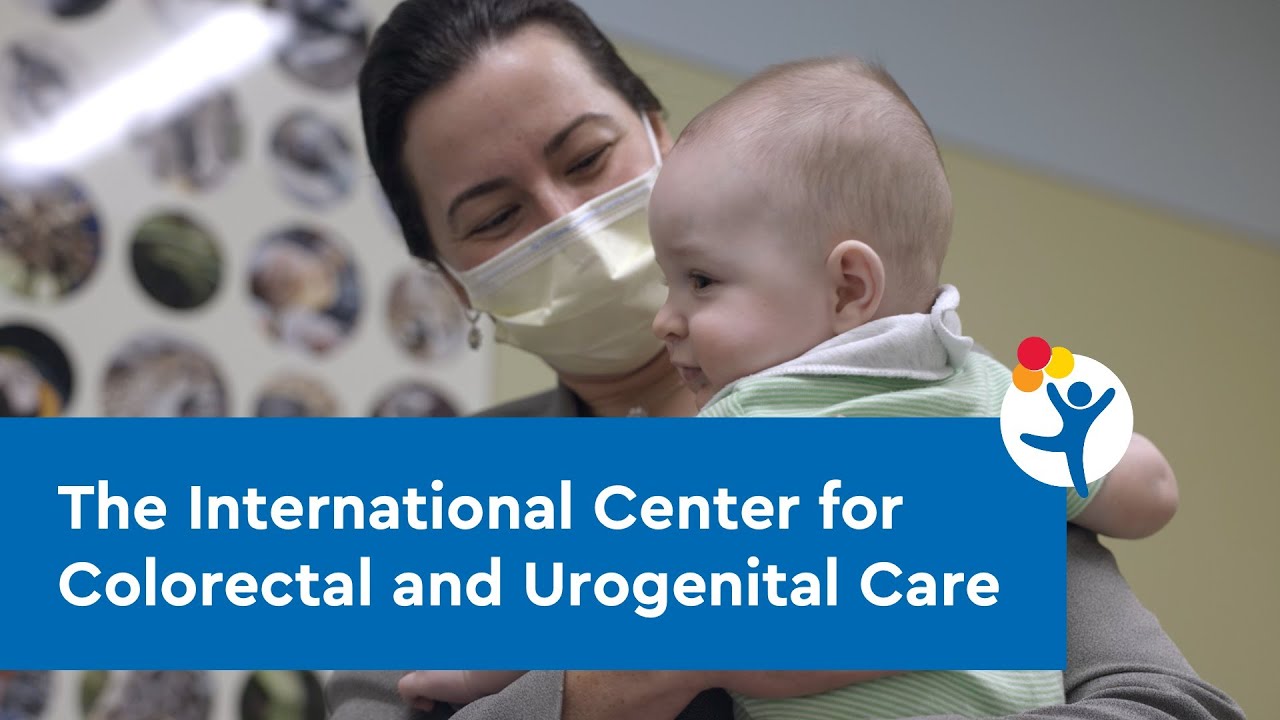
Dr. Bischoff is now Director of the International Center for Colorectal and Urogenital Care at Children’s Hospital Colorado’s — a program that Dr. Peña helped to establish — and she is now teaching the course and inspiring the next generation of pediatric surgeons.
Mairis Guindani, MD, is one of those surgeons. After taking the course last year, she travelled from Brazil to work with the colorectal team at Children’s Colorado for one month so she could learn more.
“As a pediatric surgeon, we don't see as many instances of these colorectal congenital conditions,” says Dr. Guindani. “But when you come to a center like this, where they treat a lot of these patients, they see a much larger number and obviously they can do the research and see the results. And they want to share those results and they want to teach the rest of the world how they do it because they want the world to know how to treat these kids well.”
Dr. Guindani says taking the course and seeing the live surgical demonstration makes a remarkable difference. She’s grown confident she can take what she learned back home to Brazil and help teach other pediatric surgeons.
“We use the book that Dr. Peña and Dr. Bischoff wrote,” Dr. Guindani says. “But it's very different to come here and listen to them and see their lectures and see the surgery live — that is something no one else does.”
Dr. Peña has met many surgeons in his life and says they are a proud group of people who avoid being vulnerable. “Some surgeons don’t like visitors in their operating room,” he says. “It makes them feel nervous. But ask Dr. Bichoff and myself, we love to have visitors, we love to give those operative demonstrations because that is how you learn. Things come up in surgery — sometimes there are complications. That is the reality, so you need to figure them out. If surgeons who are trying to learn only see videos, then they won’t know what to do in real life during an operation when there is an issue.”
Demonstrating the range of specialties needed for effective colorectal treatment
In addition to colorectal surgery for conditions, including anorectal formations and Hirschsprung disease, the course focuses on urology and gynecology as part of the multidisciplinary care necessary to address every aspect of these conditions.
“Urology and gynecology are always part of the course,” says Dr. Bischoff. “We try to dive a little deeper into one of these specialties each year. Last year we really focused on and went in-depth into urology and the transition from pediatric to adult care. This year, we're going to do the same for gynecology with a focus on vaginal reconstruction. And since the work we do is multidisciplinary, we feel it's important to also teach nurses and advanced practitioners.”
Dr. Bischoff says the course evolves every year. Pediatric surgeons that had taken the course as fellows often come back as practicing surgeons to see what’s new. What is truly unique about the course is that participants can learn invaluable lessons from Drs. Peña, Bischoff and De la Torre — the people who actually developed these surgical techniques for colorectal conditions over the decades.
“We usually try to plan three live surgical demonstrations for each course, which takes a lot of coordination,” says Dr. Bischoff. “But we truly believe that the only way to convince surgeons that these techniques are the way the surgery should be done is by surgically demonstrating them.”
When Dr. Bischoff joined the workshop, she introduced what is now one of the most powerful parts of the course — testimonials given by the patients themselves.
“These testimonies connect the audience with the meaning of why we are there,” says Dr. Bischoff. “Although they are short, they really touch people. The words we choose when we talk to a family and how that can be a positive or a traumatic experience for them really makes an impact on the audience. They are not always taught these things, so hearing it from the patient is really important.”
Looking beyond the initial treatment and toward the future
Dr. Bischoff says the surgery a colorectal patient receives is just the start of their care. Following up with these patients and making sure they are truly doing well makes the difference. That’s why the course dedicates time to bowel management and emphasizes the use of a multidisciplinary team in starting patients on a bowel management program after surgery. Without a bowel management component to treatment, Dr. Bischoff says, the surgeon’s job is not complete. These kinds of insights are just one thing participants learn by taking the course.
When Dr. Guindani was asked what she would say to those who were considering the course, she offered two simple words: “Take it.”
Dr. Bischoff says the course is important because it inspires the younger generation. The team is able to teach in four days what they have learned over decades and equally as important, she says, they teach what not to do. In addition to passing on their knowledge, Dr. Peña and the International Center for Colorectal and Urogenital Care team have compiled the largest database in the world on colorectal patients and outcomes, so they can look to long-term results and follow-up care that reinforces their techniques.
While officially retired, Dr. Peña continues to teach the course — not just at Children’s Colorado, but around the world. And it is much needed — while they may get 50 or 60 young surgeons who enroll in their U.S. courses, they often get hundreds when they teach in other countries. At 87 years old, Dr. Peña still puts every ounce of passion and energy he has into teaching his methods and sharing his knowledge. The live surgical demonstrations can sometimes last 10 hours, but luckily, he has Dr. Bischoff by his side to take over when he gets tired. Regarding the question of how long he plans to continue teaching the course — “Until I collapse,” he says.
Featured researcher

Alberto Peña, MD
Founding Director
International Center for Colorectal and Urogenital Care
Children's Hospital Colorado
Professor emeritus
Surgery

Andrea Bischoff, MD
Pediatric surgeon
International Center for Colorectal and Urogenital Care
Children's Hospital Colorado
Professor
Surgery-Peds Surgery
University of Colorado School of Medicine

Luis De la Torre, MD
Pediatric colorectal surgeon
International Center for Colorectal and Urogenital Care
Children's Hospital Colorado
Associate professor
Surgery-Peds Surgery
University of Colorado School of Medicine

Veronica Alaniz, MD, MPH
Pediatric and adolescent gynecologist
Pediatric and Adolescent Gynecology
Children's Hospital Colorado
Associate professor
OB-GYN-Gyn and OB Health
University of Colorado School of Medicine

Dan Wood, PhD, MB.BS, FRCS (Urol)
Associate Vice Chair of Transitional Care and Chair of Adult Congenital Surgery
Department of Pediatric Urology
Children’s Hospital Colorado
Professor
Surgery-Urology
University of Colorado School of Medicine


