



 720-777-0123





When Rowan was just two months old, he developed a large lump on his palm, just below his thumb. The family started by visiting the emergency room in their hometown of Billings, Montana. When ultrasound, X-ray and bloodwork results yielded no answers, his parents Serena and Zachary turned to their pediatrician Breanna Breeding, MD, at Billings Clinic, one of our Care Alliance partners.
After results of a biopsy were inconclusive, the family was referred to Children’s Hospital Colorado and the Center for Cancer and Blood Disorders to see experts Navin Pinto, MD, a pediatric hematologist/oncologist, and Nathan Donaldson, DO, an orthopedic oncologist and specialist in sarcoma care, for an MRI.
“The team in Billings reached out because they didn't have the capabilities from an anesthesia perspective to sedate such a young child to get this very important test. And then the second part is that we wanted to do genetic testing on Rowan's tumor,” Dr. Pinto says.
Getting answers through next-generation sequencing
The results of the MRI showed that Rowan had infantile fibrosarcoma, a rare and generally non-life-threatening cancer. In the vast majority of cases, infantile fibrosarcoma is caused by a translocation of the NTRK family of genes. These children can be treated with a drug that targets these genes. Through in-house whole-genome sequencing, the team learned this wasn’t the case for Rowan.
“We were super excited that even within a few weeks, it was clear that the tumor was shrinking,” Dr. Pinto says.
- NAVIN PINTO, MD
By sequencing a sample from the tumor, the team narrowed in on an even rarer genetic explanation: a fusion in the RAF1 gene. In a healthy person, the RAF1 gene regulates a cascade of signals that turn on and off cell growth. In Rowan’s case, this process is always “on,” causing unmitigated cell growth.
Exploring targeted therapy for Rowan’s cancer
This mutation had been described in the literature before but had only been successfully treated through chemotherapy and amputation. For Rowan, that would mean losing his thumb and first two fingers at an incredibly young age and taking on the possible lifelong effects of chemotherapy.
“In general, chemotherapy is safe, but I think the biggest concern would be that chemo may have stunted physical growth or may have had an effect on his developing brain,” Dr. Pinto explains. “And then one of the potential risks is, because most chemotherapies work by damaging the DNA of rapidly growing cells, secondary cancers are reported with chemotherapy.”
Given the genetic explanation behind Rowan’s tumor, the potential impacts of chemotherapy and their experience with RAF1 fusions, Dr. Pinto and Dr. Donaldson had a different idea. Instead of the typical course of treatment, they turned their attention to a targeted therapy called trametinib.
“We had made a little bit of a leap to another set of tumors — brain tumors — which do also sometimes harbor RAF1 fusions and have been successfully treated using trametinib,” Dr. Pinto says. “There are many kids with brain tumors that have RAF1 fusions who have been successfully treated with this approach. We knew how to dose trametinib in small babies, we had safety information about the drug, and we knew what to expect.”
Because of the team’s expertise and knowledge of trametinib, Rowan’s family decided to pursue this option, knowing that if the drug didn’t work, other treatment avenues remained on the table.
The impact of an innovative approach
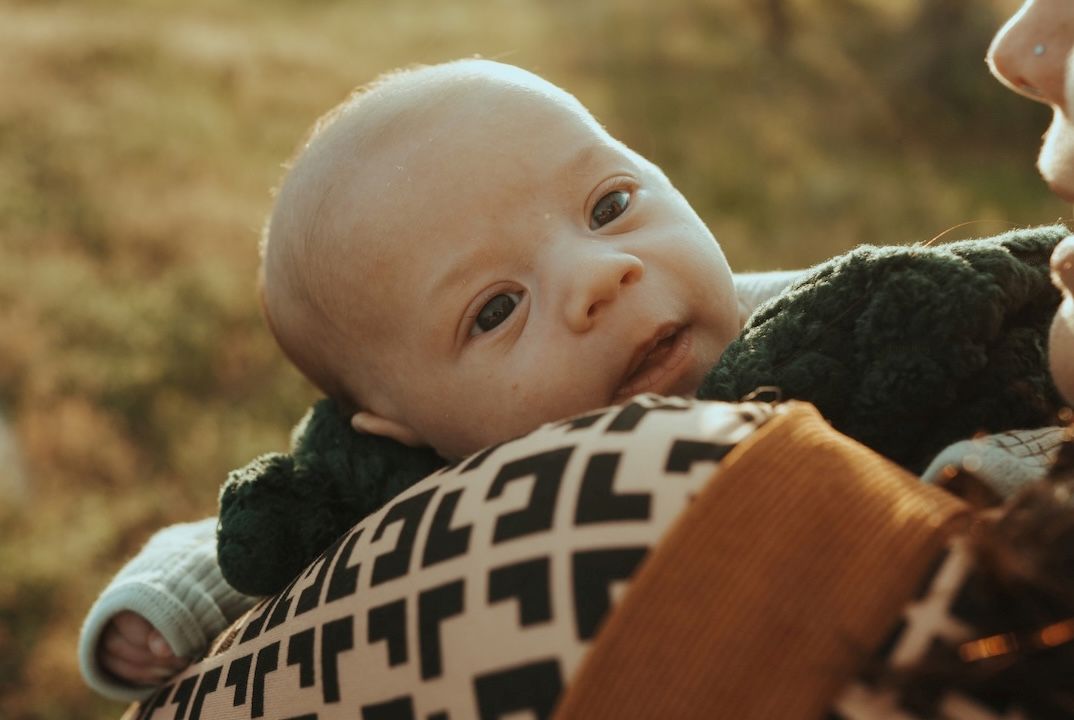
“We were super excited that even within a few weeks, it was clear that the tumor was shrinking,” Dr. Pinto says. Within a matter of months, Rowan’s tumor shrunk dramatically. In fact, the drug has worked so well that the tumor will likely either go away completely or become so small that it can be removed via surgical resection. His only side effect has been a rash, which has been managed by his home clinic.
Rowan is the first patient with this specific genetic fusion and infantile fibrosarcoma that's been successfully treated with trametinib. His care team hopes he won’t be the last. Though his treatment is ongoing, Dr. Pinto hopes to share the success of this treatment more broadly to make a major impact in infantile fibrosarcoma care.
“I have a strong suspicion that these types of tumors are out there, and there's not a lot of guidance on what to do,” he says. “Rowan's story will be important for other providers to know that at least in one case, we had a really dramatic response.”
Featured researchers
Navin Pinto, MD
Hematologist-Oncologist
Center for Cancer and Blood Disorders
Children’s Hospital Colorado
Professor
Pediatrics-Hemetology/Oncology and Bone Marrow Transplantation
University of Colorado School of Medicine

Nathan Donaldson, DO
Orthopedic surgeon
The Orthopedics Institute
Children’s Hospital Colorado
Associate professor
Orthopedics
University of Colorado School of Medicine


